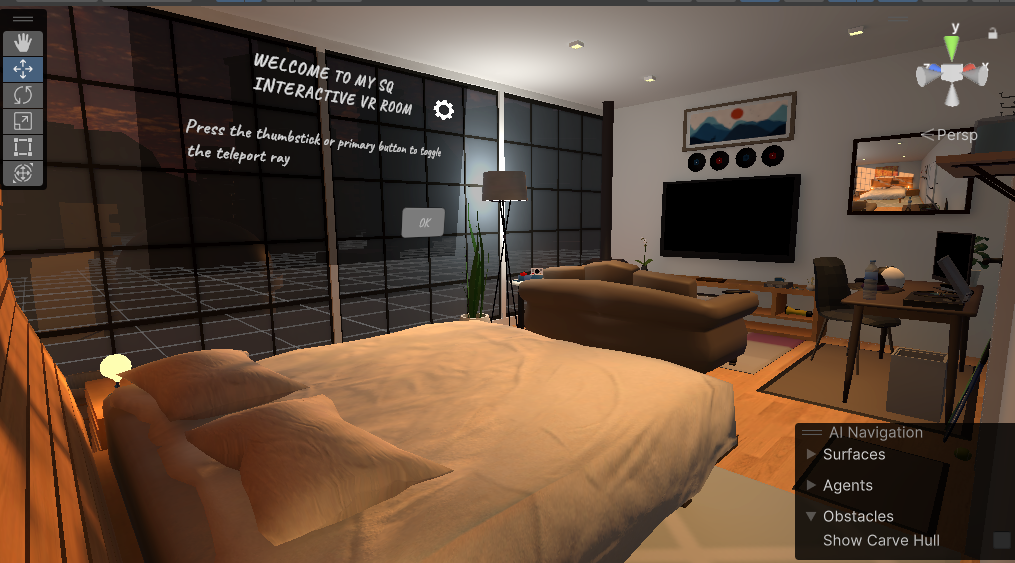
A Space Designed for the Mind
NeuroSpace was my Final Year Project at Asia Pacific University in Kuala Lumpur. The concept: design a VR environment specifically engineered to reduce cognitive stress and anxiety through carefully controlled sensory input — spatial audio, soft lighting, guided breathing prompts, and calming geometry.
The project combined UX research into therapeutic environments with real-time 3D development. I conducted user testing with participants wearing Oculus headsets, measuring self-reported stress levels before and after sessions. Results showed a measurable reduction in perceived stress after 10-minute sessions.
Research-Led VR Design
Before building anything, I researched evidence-based therapeutic environments — what colours, sounds, and spatial configurations reduce cortisol levels. The design draws on biophilic design principles: natural light simulation, organic geometry, water sounds, and open sightlines.
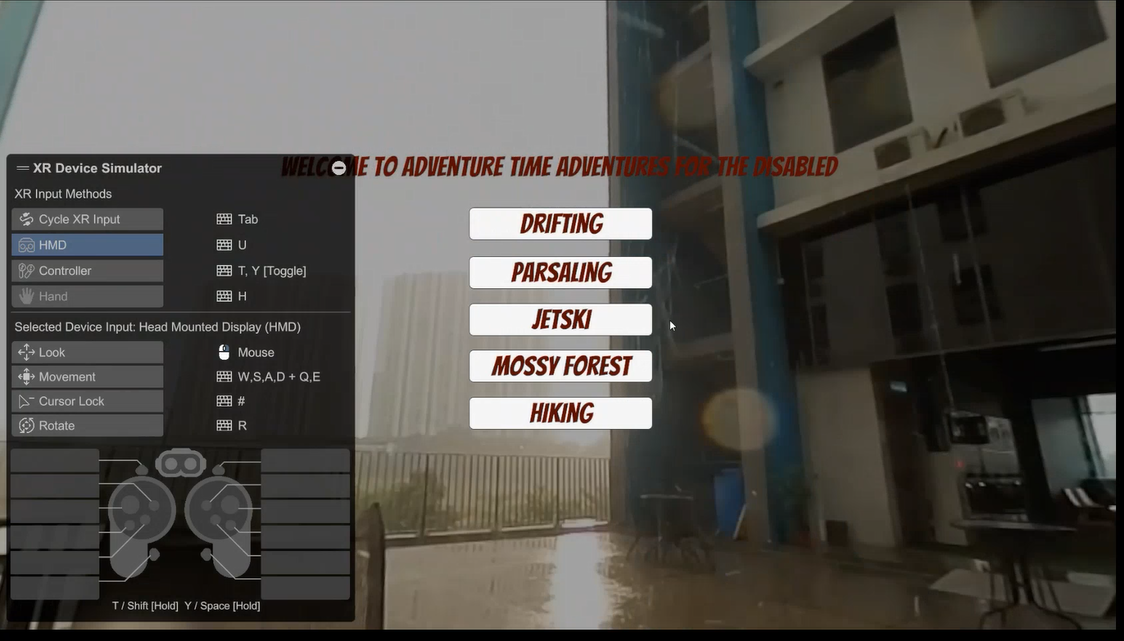
The environment features multiple zones — a forest clearing, an underwater space, and a minimalist void — each with distinct audio-visual profiles. Users can transition between zones using gaze-based interaction, keeping the experience accessible to people unfamiliar with VR controllers.
From Research to Headset
Therapeutic Environment Research
Literature review on biophilic design, colour psychology, and VR therapy studies. Defined design parameters: colour temperature, audio frequency ranges, movement speed limits to avoid VR sickness.
Environment Concept & Prototyping
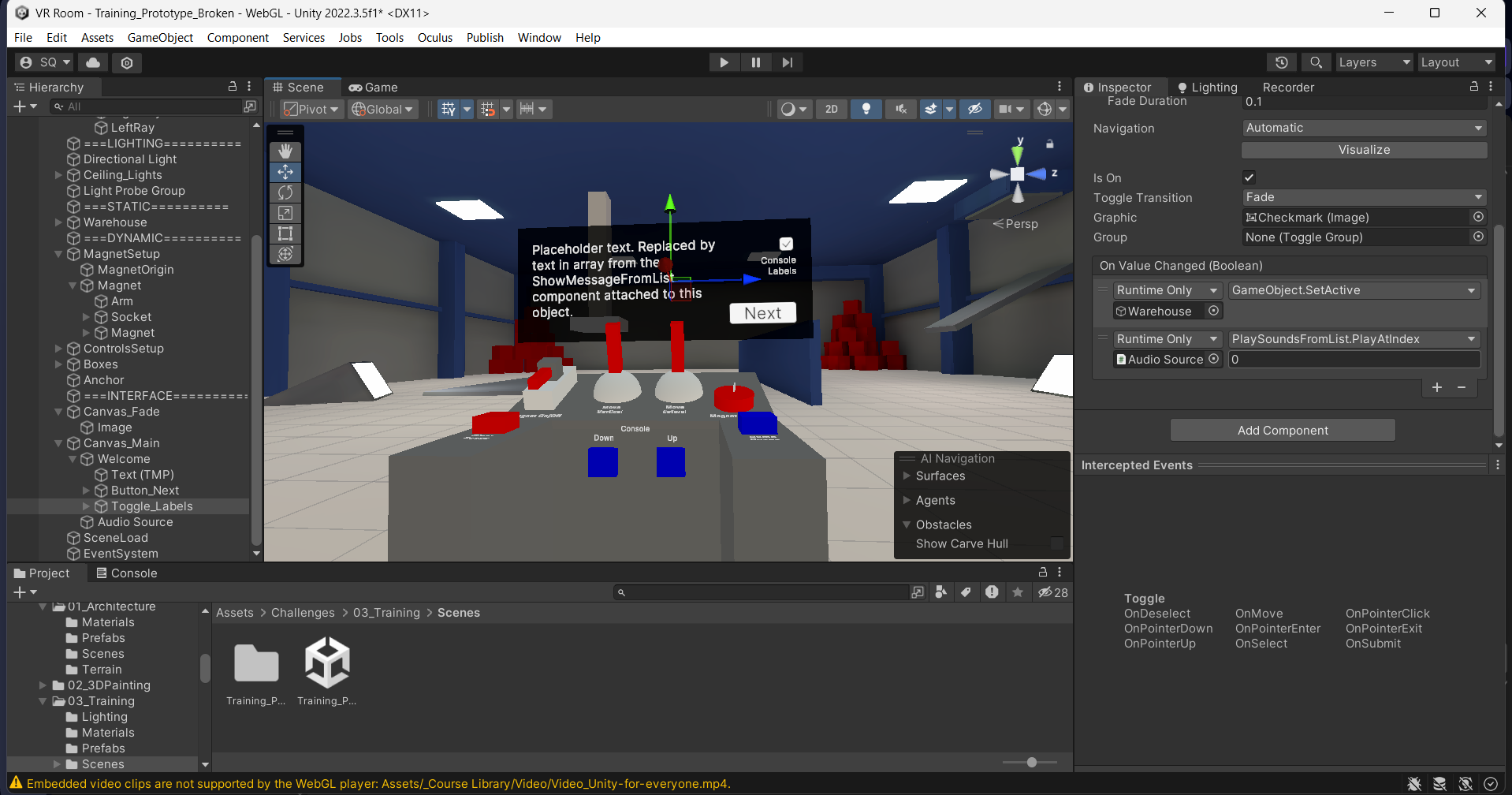
Sketched three environment concepts. Grey-boxed each in Unity to test spatial feel before committing to final assets. Conducted informal user tests with grey-box versions to validate zone transitions.
Unity Development & Spatial Audio
Built full environments in Unity with custom shaders for the underwater and void zones. Implemented Unity's spatial audio system with 3D-positioned ambient sounds. Gaze-based interaction system for accessibility.
User Testing & Iteration
Ran structured user tests with 12 participants. Collected pre/post stress ratings using a validated scale. Iterated on audio levels, transition speeds, and visual intensity based on feedback.
Tools & Technologies
Interested in Therapeutic or Experiential VR?
I design VR experiences that go beyond visuals — environments that feel right and achieve measurable outcomes.